Elevating Awareness: The Power of Isometric Design for World Environment Day Campaigns
In the modern digital landscape, capturing attention is only half the battle; retaining it and inspiring action is the true challenge. As June 5th approaches, organizations, educators, and content creators worldwide begin their preparations for World Environment Day. This global event serves as a critical reminder of our collective responsibility to protect the planet. However, in an era of information overload, traditional messaging often gets lost in the noise. This is where the intersection of environmental advocacy and advanced graphic design comes into play. Specifically, the use of Happy World Environment Day Isometric illustrations has emerged as a powerful tool to communicate complex ecological concepts in a visually engaging and accessible manner.
Understanding the significance of these design assets requires looking beyond mere aesthetics. When we discuss a World Environment Day vector illustration or a specialized city illustration design, we are talking about visual storytelling. These assets are not just decorative; they are functional tools designed to increase the attractiveness of your visitors on social media platforms, websites, and educational materials. By utilizing high-quality, editable resources such as PSD, AI, EPS, and PDF files, creators can tailor messages that resonate deeply with diverse audiences, from school children to corporate stakeholders.
The Visual Language of Sustainability: Why Isometric?
To appreciate why isometric design is so effective for Green Eco Earth themes, one must understand the style itself. Isometric projection is a method of graphical representation that allows three-dimensional objects to be depicted in two dimensions without perspective distortion. Unlike traditional perspective drawing, where parallel lines converge at a vanishing point, isometric lines remain parallel. This creates a clean, organized, and almost architectural look that is incredibly popular in modern UI/UX design, gaming, and infographics.
When applied to a World Environment Day background or card, this style offers several distinct advantages:
- Clarity and Detail: Isometric views allow designers to show multiple sides of an object simultaneously. For a "Green City" concept, this means you can display solar panels on rooftops, vertical gardens on building facades, and electric vehicles on the streets all in one cohesive image.
- Modularity: The grid-based nature of isometric art makes it easy to add or remove elements. This is crucial when creating customizable designs where specific local landmarks or unique eco-initiatives need to be highlighted.
- Engagement: The pseudo-3D effect creates a sense of depth and immersion that flat design often lacks. It invites the viewer to "explore" the image, increasing the time spent looking at the content and, consequently, the retention of the message.
For those new to design, it is a common misunderstanding that isometric art is overly technical or rigid. In reality, modern World Environment Day concept illustrations leverage this style to create whimsical, vibrant, and inviting scenes. A well-crafted isometric city doesn't look like a cold blueprint; it looks like a thriving, sustainable community that viewers aspire to be part of.
Practical Applications in Modern Communication
The utility of a high-resolution World Environment Day vector illustration extends far beyond a single social media post. In today's multi-channel marketing and communication strategies, consistency and adaptability are key. Having access to source files like PSD (Photoshop), AI (Illustrator), EPS, and PDF ensures that a single design asset can serve multiple purposes across various platforms.
Consider the following scenarios where these editable assets prove invaluable:
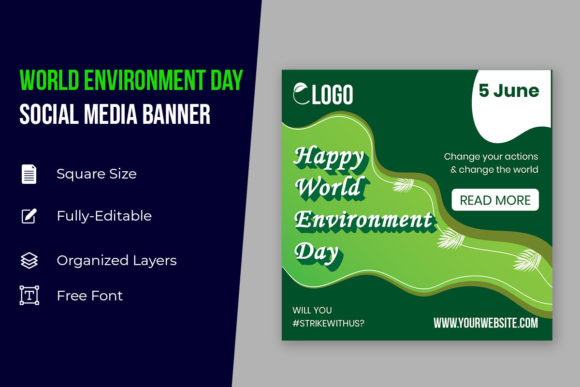
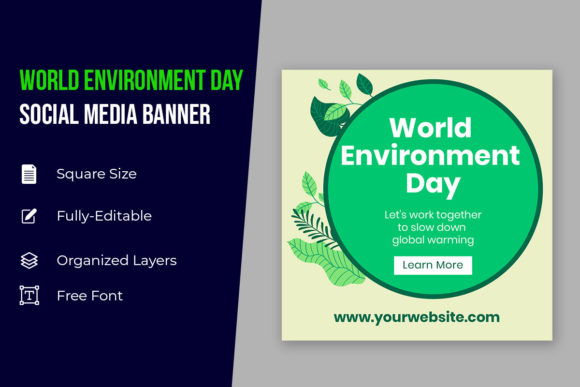
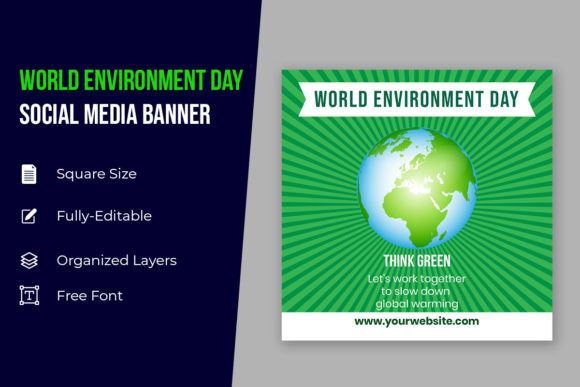
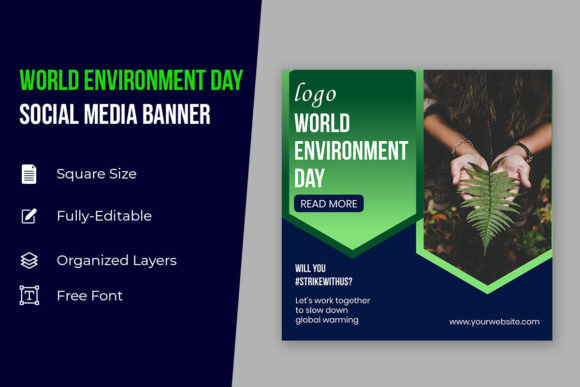
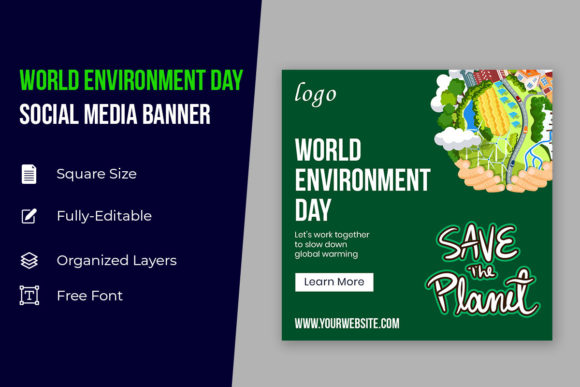
- Social Media Campaigns: Platforms like Instagram and LinkedIn favor square formats. A design sized at 1080×1080 Pixels with a resolution of 72 DPI in RGB color mode is optimized specifically for these feeds. The layered nature of these files allows marketers to swap out text overlays, change brand colors, or update statistics without starting from scratch.
- Educational Materials: Teachers and NGOs can use these illustrations to create handouts, presentation slides, or interactive worksheets. Because the elements are often separated into layers or smart objects, educators can isolate specific components—like a recycling bin or a wind turbine—to teach specific lessons about sustainability.
- Corporate Reporting: Businesses aiming to highlight their ESG (Environmental, Social, and Governance) goals can incorporate these professional graphics into annual reports or internal newsletters. The clean lines of isometric design convey professionalism and forward-thinking innovation.
- Web and App Interfaces: Developers can extract vector elements (from AI or EPS files) to use as icons or hero images on landing pages dedicated to green initiatives. Vectors ensure that the graphics remain crisp on any screen size, from mobile phones to large desktop monitors.
Technical Specifications: What Makes a File "Professional"?
When sourcing design assets for a campaign as important as World Environment Day, understanding the technical specifications is vital for ensuring quality and ease of use. A premium package typically includes a comprehensive set of files to cater to different software preferences and skill levels.
File Formats Explained:
- PSD (Photoshop Document): Ideal for raster-based editing. A good PSD file will feature Smart Objects. Smart Objects are layers that contain image data from raster or vector images, allowing you to scale, rotate, or warp them without losing quality or original image data. This is essential for maintaining the sharpness of your Green Eco Earth graphics.
- AI (Adobe Illustrator): The native format for vector graphics. This is the most flexible format, allowing for infinite scalability. If you need to print your design on a billboard or a small business card, the AI file ensures no pixelation occurs.
- EPS (Encapsulated PostScript): A universal vector format compatible with many design programs beyond Adobe, such as CorelDRAW or Inkscape. It is excellent for sharing with printers or collaborators who may not have the latest Creative Cloud subscriptions.
- PDF (Portable Document Format): Great for quick previews and sharing with clients or team members who do not have design software installed. It preserves the layout and vector integrity.
Furthermore, the organization of these files matters. A 100 Layered Full Editable structure means that every tree, building, cloud, and character is on its own layer. This level of granularity empowers users to customize the scene extensively. For instance, if your campaign focuses on ocean conservation rather than urban forestry, you can easily hide the city elements and bring the water features to the forefront.
Demystifying Customization for Non-Designers
A frequent barrier to using professional design assets is the fear of complexity. Many assume that to edit a World Environment Day card or banner, one must be a certified graphic designer. However, the inclusion of Easy customizable editable Smart Objects changes this dynamic entirely.
Smart Objects act as containers. You can double-click a smart object layer, paste your own logo or photo inside, save it, and the main design updates automatically. This feature bridges the gap between professional design quality and user-friendly customization. Additionally, reputable design packages often include an Information File and a Help File. These documents guide the user through the folder structure, explain the color codes used (often Pantone or Hex values for consistent branding), and provide tips on how to export the final images for web or print.
It is also important to note the color profile. Designs intended for digital screens should be in RGB (Red, Green, Blue) mode, which offers a wider gamut of colors suitable for monitors and smartphones. The standard resolution for web graphics is 72 DPI (Dots Per Inch). While 300 DPI is required for high-quality physical printing, 72 DPI keeps file sizes manageable for fast loading on websites and social media, ensuring your audience doesn't bounce due to slow load times.
The Broader Impact: From Pixels to Planet
Ultimately, the goal of utilizing a Happy World Environment Day Isometric City Illustration is not just to create a pretty picture. It is to foster a connection. Visuals process faster in the human brain than text. A vibrant, detailed isometric city filled with green spaces, renewable energy sources, and happy citizens paints a tangible picture of a sustainable future. It moves the conversation from abstract warnings about climate change to a concrete vision of what we can achieve.
By making these assets fully editable and available in multiple formats, the design community empowers activists, businesses, and individuals to become storytellers. Whether it is a small local NGO raising awareness about plastic pollution or a multinational corporation announcing a new carbon-neutral initiative, the right visual aid can amplify the message exponentially.
In conclusion, as we prepare for World Environment Day, let us recognize the value of high-quality, versatile design resources. The combination of isometric aesthetics, robust file formats (PSD, AI, EPS, PDF), and user-friendly customization features provides the perfect toolkit for modern communication. By leveraging these tools, we can create content that is not only visually stunning but also educationally profound, driving real engagement and inspiring the actions necessary to protect our Green Eco Earth.