Evaluating Reusable World Environment Day Social Media Templates for Digital Campaigns
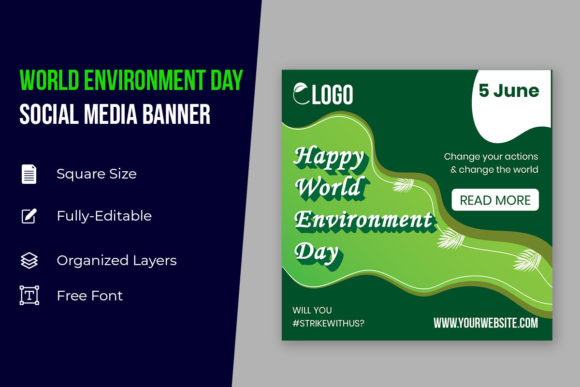
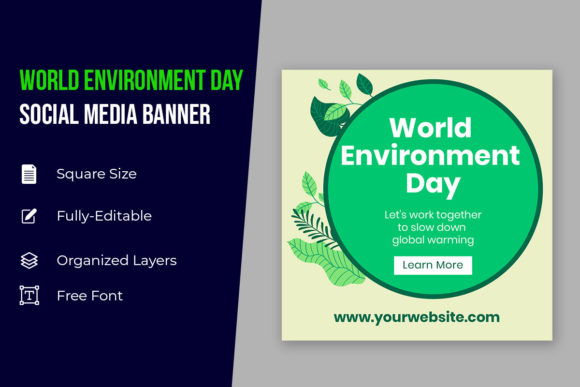
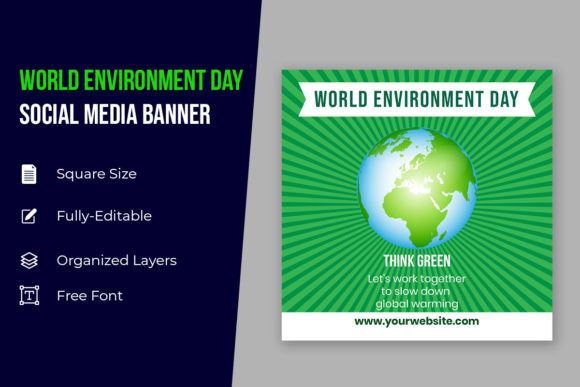
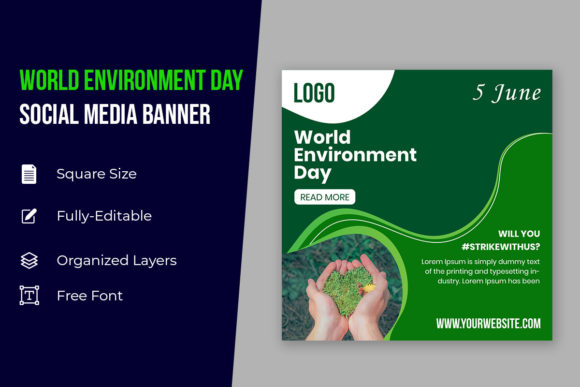
As June 5th approaches, organizations, non-profits, and individuals globally begin preparing for World Environment Day. This annual event serves as a critical platform for raising awareness about environmental issues, from plastic pollution to climate change. In the digital age, the effectiveness of these campaigns often hinges on visual communication. Consequently, many content creators are turning to pre-designed assets, specifically Reuse World Environment Day Social Media templates, to streamline their outreach. These resources typically include vector illustrations, backgrounds, and card designs featuring concepts like a Green Eco Earth. Understanding the value, limitations, and practical applications of these reusable assets is essential for anyone looking to maximize their impact without compromising on quality or brand integrity.
Understanding Reusable Social Media Assets
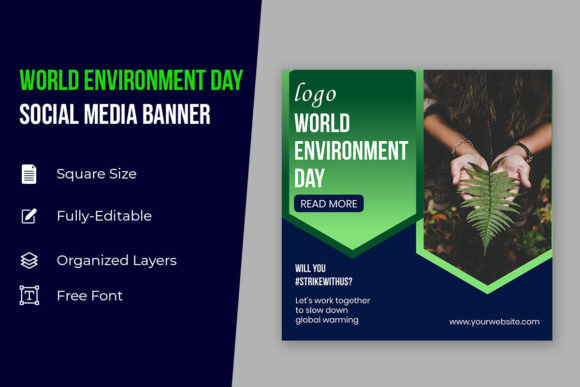
The concept of "Reuse World Environment Day Social Media" refers to the utilization of pre-made, editable graphic design files tailored for social media platforms. Unlike static images that cannot be altered, these templates are provided in professional formats such as PSD (Photoshop), AI (Illustrator), EPS, and PDF. The core idea is efficiency: rather than designing a campaign visual from scratch, a user downloads a high-quality base design—often featuring a World Environment Day vector illustration or a specific background—and customizes it to fit their specific message.
These packages generally include fully layered files, allowing for deep customization. A standard offering might feature a resolution of 1080×1080 pixels at 72 DPI, optimized for platforms like Instagram, Facebook, and LinkedIn. The inclusion of Smart Objects in PSD files is particularly significant, as it allows users to swap out placeholder images or text blocks rapidly while maintaining the original design's lighting, shadows, and perspective. This technical flexibility transforms a generic World Environment Day card into a personalized call to action.
Reasons for Adopting Pre-Designed Templates
There are several compelling reasons why a marketing team or an individual advocate might choose to utilize these reusable templates. Primarily, it addresses the constraint of time and resources. Designing a professional-grade graphic requires not only artistic skill but also significant time investment. By leveraging a template that includes all main elements as editable and customizable, creators can focus their energy on crafting the narrative and strategy behind the campaign rather than the mechanics of layout and typography.
Furthermore, these templates ensure a baseline of aesthetic quality. Professional designers create these assets with current design trends in mind, ensuring that the resulting World Environment Day background or illustration looks modern and engaging. For small businesses or NGOs with limited budgets, accessing high-quality design work through a single download is far more cost-effective than hiring a freelance designer for a one-off project. The ability to access files in multiple formats (PSD, AI, EPS, PDF) ensures compatibility regardless of the software suite the user possesses.
Benefits and Practical Advantages
The primary benefit of using these assets is scalability. Once a user acquires a template, they can generate variations for different days of the campaign week. For instance, a single "Green Eco Earth" illustration can be paired with different statistics, quotes, or event details across multiple posts. The layered nature of these files means that every element, from the background texture to the typography, can be adjusted to align with an organization's brand guidelines.
Another significant advantage is the technical specification of the files. A design created at 1080×1080 pixels with 72 DPI resolution in RGB color mode is perfectly suited for digital screens. This eliminates the guesswork regarding aspect ratios and file sizes, ensuring that the image renders sharply on mobile devices and desktops alike. Additionally, the inclusion of help files and information documents assists users in navigating the layers and understanding which fonts were used, often providing links to free font repositories to maintain legal compliance.
Considerations and Tradeoffs
While the advantages are clear, there are tradeoffs to consider when relying on reusable templates. The most notable concern is uniqueness. Since these templates are often sold on marketplaces to a wide audience, there is a possibility that another organization may use the same World Environment Day vector illustration or background. This can dilute the distinctiveness of a brand's visual identity if the template is not sufficiently customized.
To mitigate this, users must invest time in altering the color palettes, swapping out stock imagery for original photography, and modifying the layout. Relying solely on the default settings of a template may result in a generic appearance that fails to capture the specific nuance of a local or niche environmental issue. Furthermore, while the files are editable, they do require a certain level of proficiency with design software. A user unfamiliar with Smart Objects in Photoshop or artboards in Illustrator may find the learning curve steep, potentially negating the time-saving benefits.
Ideal Scenarios for Implementation
Reusable World Environment Day social media templates are a strong fit for specific situations. They are ideal for small to medium-sized enterprises (SMEs) that need to maintain a consistent posting schedule during awareness weeks but lack an in-house design team. They are also highly effective for educational institutions and community groups that need to produce a high volume of informational graphics quickly.
Additionally, these assets are perfect for agencies managing multiple clients. An agency can purchase a robust template pack and efficiently customize it for various clients by simply changing the logo, color scheme, and copy. This allows for rapid deployment of campaigns across different accounts while maintaining a professional standard. If the goal is to increase the attractiveness of visitors to a social media profile through polished, cohesive visuals, these templates provide a reliable foundation.
When to Consider Alternatives
Despite their utility, there are scenarios where alternatives may be worth considering. Large corporations with strict brand governance and substantial marketing budgets may find that custom, bespoke design offers better alignment with their long-term brand equity. In cases where a campaign requires highly complex data visualization or unique interactive elements that static templates cannot support, hiring a dedicated designer is the superior choice.
Moreover, if an organization aims to launch a viral campaign dependent on a completely novel visual hook, the risk of template recognition by the audience might be too high. In such instances, investing in original artwork ensures total exclusivity. Similarly, if the team lacks any member with basic design software skills, the complexity of editing layered PSD or AI files might lead to frustration, making drag-and-drop online design tools a more user-friendly, albeit less flexible, alternative.
Making the Decision
Deciding whether to utilize Reuse World Environment Day Social Media templates ultimately depends on balancing speed, budget, and brand distinctiveness. For those who need to deploy a professional-looking campaign quickly and have the capability to customize the layers effectively, these assets offer exceptional value. They bridge the gap between amateur efforts and professional design, providing the necessary tools to create compelling World Environment Day cards and backgrounds.
Prospective users should evaluate their internal resources before downloading. If the team can commit to modifying the Smart Objects and adjusting the design to avoid a "cookie-cutter" look, these templates can significantly enhance the visual appeal of their environmental advocacy. However, if absolute uniqueness is the paramount goal and resources allow, a custom design route remains the gold standard. By carefully weighing these factors, organizations can select the approach that best amplifies their message for a greener future.