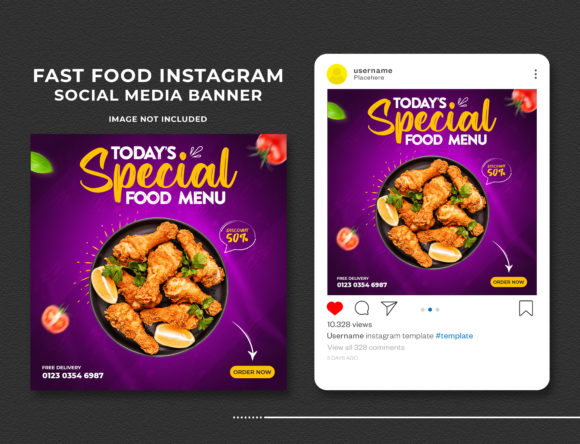
Boost Your Menu with a Fast Food Social Media Banner Post
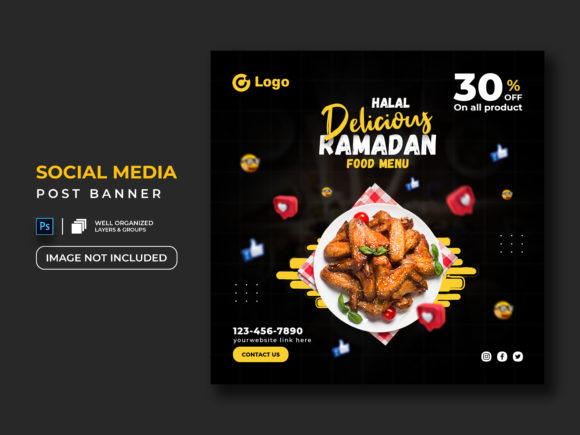
In the fast-paced world of food service, visual appeal is often the deciding factor between a customer scrolling past your page or stopping to place an order. A Fast Food Social Media Banner Post serves as a digital storefront window, instantly communicating your brand's flavor, freshness, and current offers. For restaurant owners, marketers, and freelance designers, having access to a high-quality, pre-designed template can transform how you manage your online presence. Instead of starting from scratch every time you want to promote a new burger combo or a limited-time dessert, you can leverage a structured design that is ready to go.
The core value of these templates lies in their efficiency and professional polish. Many small business owners wear multiple hats, juggling cooking, staffing, and marketing. Spending hours trying to align text boxes or match colors in design software is time taken away from running the business. A well-organized template solves this by providing a solid foundation. You get a layout that has already been tested for visual balance, ensuring that your food photography looks appetizing and your promotional text is legible on mobile screens.
Why Structure Matters in Digital Design
When you download a premium template, you are not just getting an image; you are getting a workflow upgrade. The best templates are characterized by how they are built behind the scenes. A truly useful file is fully editable and logically organized. Imagine opening a file where every element is named clearly, such as "Background," "Headline Text," or "Food Image." This level of organization means you do not have to hunt through dozens of unnamed layers to find what you need.
One of the most powerful features found in professional templates is the use of Smart Objects. For those who may not be Photoshop experts, this feature is a game-changer. A Smart Object acts as a placeholder for your images. Instead of manually resizing, cropping, and warping a photo of your latest pizza to fit a specific shape, you simply double-click the layer, paste your new image, save it, and the template automatically adjusts the photo to fit perfectly within the design frame. This preserves the quality of your image and ensures consistency across all your posts.
Customization Without the Learning Curve
The misconception that you need to be a graphic design guru to use these tools is common, but unfounded. Modern templates are designed with the user in mind. If you know the very basics of Photoshop, such as how to type text or change a color swatch, you can customize a Fast Food Social Media Banner Post in minutes. The ability to change fonts, colors, and images quickly allows you to adapt the design to match your specific branding guidelines or seasonal themes.
For instance, if your restaurant is launching a summer menu, you might want to swap out warm red tones for vibrant yellows and greens. In a well-structured PSD file, this is often as simple as clicking a color layer and selecting a new hue. Similarly, if you want to highlight a different font style to match a holiday promotion, the text layers are ready for you to edit. Since these templates often utilize free fonts, you do not need to worry about purchasing expensive licenses or dealing with missing typography errors when you open the file.
Practical Applications for Businesses and Creators
The versatility of a 1080×1080 px square format makes it ideal for various platforms, primarily Instagram and Facebook, but also for LinkedIn or even digital menu boards. Here is how different users can leverage these designs:
- Restaurant Owners: Use the template to announce daily specials, happy hour deals, or new store openings. The high resolution (300 DPI) ensures that even if you print the design for in-store flyers, it remains crisp and clear.
- Social Media Managers: Maintain a consistent aesthetic for clients without reinventing the wheel for every post. You can create a series of posts that look cohesive, building stronger brand recognition.
- Freelance Designers: Speed up your delivery time. By using a robust base template, you can offer social media packages to food clients at a competitive rate while maintaining high profit margins due to reduced labor time.
- Food Bloggers: Create eye-catching graphics to promote recipe reviews or restaurant visits, making your feed look professional and engaging to potential sponsors.
Consider a scenario where a local taco shop wants to promote a "Buy One, Get One Free" deal for Tuesday nights. With a ready-made template, the owner can drop in a high-quality photo of their tacos, update the text to reflect the offer, change the background color to match their logo, and export the file—all within ten minutes. This agility allows businesses to react quickly to trends or inventory needs, such as clearing out excess stock before the weekend.
Technical Specifications That Ensure Quality
When selecting a template, technical details matter more than you might think. A size of 1080×1080 pixels is the industry standard for social media, ensuring your post looks sharp on both smartphones and desktop monitors. Furthermore, working in RGB color mode is essential for digital display, as it guarantees that the vibrant colors of your food—like the red of a tomato or the golden brown of a fry—appear true to life on screens.
The resolution of 300 DPI (dots per inch) is another critical factor. While screens typically display at 72 DPI, designing at 300 DPI provides a buffer of quality. It means your images contain more data, preventing pixelation if the image is viewed on high-retina displays or if you decide to repurpose the graphic for print materials like table tents or window decals.
Things to Consider Before You Start
Before diving into editing, there are a few practical considerations to keep in mind to ensure the best results. First, always use high-quality photography. Even the best template cannot fix a blurry or poorly lit photo of food. Since the image container uses Smart Objects, the template will frame your image beautifully, but the source material must be good. Try to take photos in natural light or use a lightbox to make your dishes pop.
Secondly, respect the hierarchy of the design. The original designer arranged the elements to guide the viewer's eye in a specific way—usually from the main image to the headline, then to the call to action. When you edit the text, try to keep your headlines concise. Overcrowding the design with too many words can dilute the impact. Remember, social media users scroll quickly; your message needs to be understood in a split second.
Finally, ensure you have the correct software. While these templates are built for Adobe Photoshop, knowing that they rely on specific features like Smart Objects means you should have a version of Photoshop that supports them. However, the learning curve is minimal. Many online tutorials can walk you through the basics of replacing Smart Objects and editing text layers in under five minutes.
Ultimately, utilizing a Fast Food Social Media Banner Post template is about working smarter, not harder. It bridges the gap between professional design standards and the practical needs of busy food entrepreneurs. By providing a structured, easy-to-edit, and visually stunning foundation, these tools empower you to focus on what you do best: creating delicious food and serving your community, while your social media presence remains vibrant and engaging.